
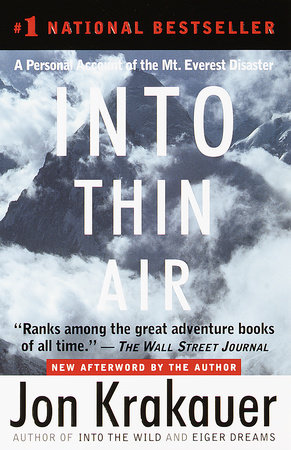
Over the course of the last few weeks, I had the chance to read the non-fiction novel Into Thin Air by Jon Krakauer, which accounts for a terrible disaster on Mount Everest. While I was reading, I was able to analyze the events of the novel through two different literary lenses: reader response theory and archetypal theory. My first blog post was viewing the novel from a reader response theory. Now that I’ve completed the novel and have taken the time to stand back and look at it as a whole piece of work.
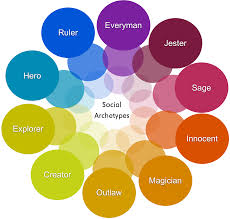
Archetypal Criticism refers to recurring images, symbols or patterns which may include motifs such as the quest or the heavenly ascent, recognizable character types such as the apple or snake are all laden with meaning already when employed in a particular work. Common archetypal figures are; The Child, The Hero, The Great Mother, The Wise old man, and The Trickster or fox.
Applying Archetypal Literacy Theory
Character Comparisons
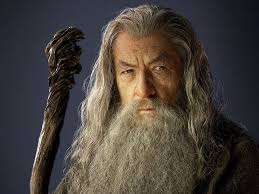
“The Wise Old Man” can be displayed through the guides such as Rob Hall (mountain guide), who called the shots and is responsible for lives of all the teammates upon Everest. He demonstrates care for his clients and staff as he was “always especially concerned about the welfare of the sherpas who worked for him.” (Krakauer 54) Hall was known to have a “phenomenal success rate” (Krakauer 37) when it came to clients reaching the summit. This encouraged people to put their trust in him as a guide.
“The Child” refers to the all the inexperienced climbers including Jon who showcase innocence and a begging point. Krakauer thinks that some climbers “if denied the service of guides, would probably have difficulty making it to the top of a peak as modest as Mount Rainier” (Krakauer 26) and “in outlook and experience they were nothing like the hard-core climbers with whom I usually went into the mountains” (Krakauer 39). This proves that these climbers are ill-equipped to climb a mountain as challenging as Everest.
Jon’s journey on Mount Everest could be described as the archetypal “Hero’s journey”. The “Hero’s journey” is a common template of a broad category of tales and lore that involves a hero who goes on an adventure, and in a decisive crisis wins a victory, and then comes home changed or transformed. “It has been a little sketchy there for a while, but in the end everything had turned out great” ( Krakauer 203) is showing despite the crisis there was a victory. Jon’s journey connected very well to the standard hero’s journey – he started in an ordinary world, was brought on an adventure, was tested through entry to a new ‘world’ (with the world being Mount Everest), and was brought to a challenge. Based on how well Jon’s journey lined up with the hero’s journey, I was able to accurately predict what would happen next in the novel. This connection strengthened my comprehension of the novel – by knowing what was going to happen next, I was able to focus on the significance of the little details and actions, such as the confusion and the fear in each character.
Symbols

The mountain is the most obvious archetypal symbol throughout this novel but its more clear in this section of its meaning. Krakauer and most other climbers are being propelled up the highest mountain in the world solely by their ambition, and it showed when Krakauer reached the summit, he describes his state as slowly dying from lack of oxygen, in other words he was too tired to care of his accomplishment or even acknowledge it.
As the final symbol we have the ice/snow, which had a stronger meaning in this section of harshness and death. It was the weather that kept delaying climbers and at the end it was a blizzard that killed climbers.
All together, these Archetypal symbols combine to create a strong meaning and summary of how the journey of the summit of Everest was an emotional and physical beating for Krakauer and will always be for the future climbers of the tallest mountain in the world. Archetypal Criticism allowed me to see the novel on a whole new level, making connections to imagery and previous symbols I have seen.
This book taught me how important trust and loyalty was for each other during the expedition despite not knowing the person personally. This was an amazing read just like Jon’s first book and I was not disappointed a bit.
Works Cited
Novel
“Into Thin Air.” Google Play. Google. 16 July 2019 <https://play.google.com/books/reader?id=gt7EQgH8-b4C&pg=GBS.PT83.w.1.0.359>.
Secondary Sources
Krakauer, Jon. “Into Thin Air by Jon Krakauer.” Pan Macmillan. 16 July 2019 <https://www.panmacmillan.com/authors/jon-krakauer/into-thin-air/9781447200185>.
Bynamitapl04, Posted. “Readers Response Literary Criticism: Into Thin Air.” Namita Patel. 11 July 2019. 17 July 2019 <https://namitasblog.video.blog/2019/07/10/readers-response-literary-criticism-into-thin-air/>.
Sign In. 16 July 2019 <https://tvdsb.elearningontario.ca/d2l/le/content/14267816/fullscreen/109746636/View?d2lSessionVal=H4VvV8wEVd08k218ZL6hVtrQR&ou=14267816&d2l_body_type=3&retargetQuicklinks=true&skipHeader=true>.
“Hero’s journey.” Wikipedia. 06 July 2019. Wikimedia Foundation. 16 July 2019 <https://en.wikipedia.org/wiki/Hero’s_journey>.
Images
“Examples of Old Man Archetype in Film.” Literary Archetypes: The Wise Old Man. 19 Apr. 2014. 16 July 2019 <https://shughes3.wordpress.com/examples-of-literary-archetypes/>.
“Building Characters with Archetypes.” Yeah Write! 27 Dec. 2015. 16 July 2019 <https://www.yeahwrite.org/?p=2374>.
“Everest Guide Dies After 15-Story Fall Into Ice Chasm.” National Geographic. 22 Apr. 2012. National Geographic Society. 16 July 2019 <https://news.nationalgeographic.com/news/2012/04/120422-everest-death-sherpa-falls-first-science-world/>.
GIF’s
Giphy. “Everest Mount GIF – Find & Share on GIPHY.” GIPHY. 22 Jan. 2018. GIPHY. 17 July 2019 <https://giphy.com/gifs/everest-mount-7uMpPzHsB6ojC>.
 Namita Patel